


Insurance Claims › Mortgage Company & Draws
Insurance Check Made Out to You, Your Contractor and Your Mortgage Company?
Here’s why everyone’s name is on the check, how mortgage draws and lender inspections work in Michigan, why the money gets held up, and how our in-house coordinator handles the whole process for you.
“Here’s What’s Really Going On”
When your house is damaged, the insurance money for the building isn’t really just yours. Your bank still owns part of that house, so the insurance company puts the bank’s name on the check right next to yours, and usually ours too as your contractor, so the money goes where the work is. The bank won’t just sign it and hand you a big check. They want to see the house getting fixed before they let go of the money.
So they break it up. Some money now, some when the job is halfway done, and the rest when it’s finished. Before each payment, they usually want an inspection and a stack of paperwork. Miss one piece and the money sits there, and so does your rebuild.
We have someone in our office whose whole job is handling that. She talks to the bank, sends the paperwork, sets up the inspections and keeps calling until the money is released. Most restoration companies don’t do that. They hand you the check and wish you luck.
— Bryan, owner of Select Restoration
Your Mortgage Company Has a Stake in Your Home
Until your loan is paid off, your house is the lender’s security. That’s why most mortgages require the lender to be named on insurance payments for damage to the building, and why they want proof the repairs are actually done before releasing all of the money.
It protects them, but for homeowners it can mean weeks of phone calls, forms, inspections and waiting, right when you’re trying to get back home.
What This Means for You
- The check needs your signature, your contractor’s and your lender’s
- Larger claims are often paid out in stages
- An inspection may be needed before each draw
- Every draw needs the right paperwork
- Missing one form can hold up your whole job
How the Mortgage Check Process Usually Works
How Lenders Often Release the Money
Every lender sets its own rules, but many follow a pattern like this on larger claims.
Why Your City May Hold Part of Your Fire Insurance Money
Michigan has a law most homeowners have never heard of until it happens to them. In cities that have adopted it, the insurance company has to hold back part of a fire settlement and send it to the city treasurer until the house is repaired, cleaned up or torn down. It’s meant to stop burned-out houses from being abandoned.
We help homeowners file the repair contract on time and get the paperwork to the city, so this money doesn’t sit in a city account while your rebuild waits. Based on MCL 500.2845. Rules can change and depend on your city, so ask your adjuster or city treasurer.
What Lenders Usually Ask For
Mortgage & Insurance Words, Explained
Your lender and adjuster will use these. Here’s what they actually mean.
Loss payee / mortgagee
The lender named on your policy and your insurance check because they have a financial interest in the home.
Loss draft department
The department at your lender that handles insurance checks. Not the same address as your monthly payment.
Endorsement
Signing the back of the check. Everyone named signs it: usually you, your contractor and then your lender.
Monitored claim
A larger claim where the lender holds the money in a separate account and releases it in stages.
Non-monitored claim
A smaller claim, under the lender’s limit, where they usually just sign the check and return it.
Restricted escrow account
The separate account where the lender holds your insurance money during repairs.
Draw
Each payment the lender releases as the work gets done.
Draw inspection
A visit or photo check the lender uses to confirm progress before the next draw.
Third-party authorization
A form you sign so your lender can talk to your contractor about the claim.
Lien waiver
A document showing the contractor and suppliers have been paid for the work so far.
Holdback / recoverable depreciation
Money your insurer may hold until repairs are finished, paid after you show the work is done.
Certificate of completion
Paperwork, often with the city’s final inspection, showing the job is finished.
Why Insurance Money Gets Stuck with the Lender
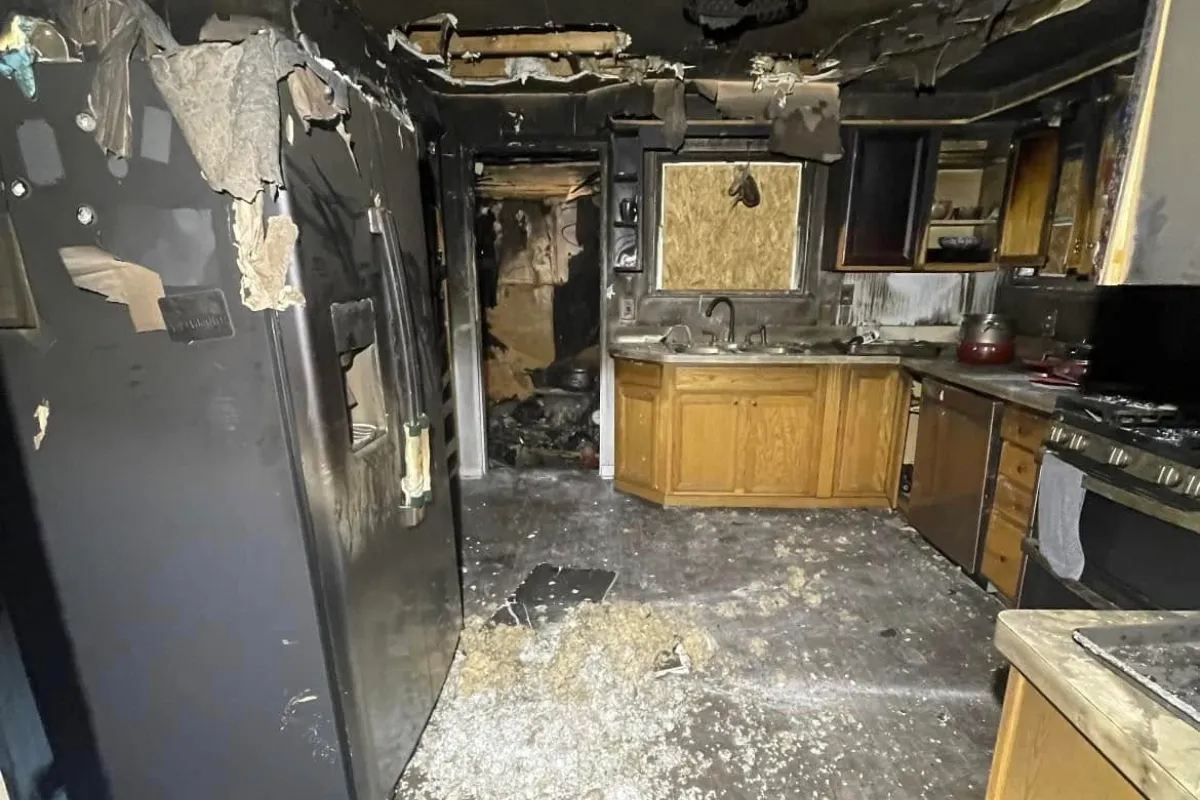
We Handle the Mortgage Company for You
Most restoration companies hand you the check and leave you to fight with the lender. We have an in-house mortgage coordinator whose job is to keep your money moving:
- Gets your signed authorization so your lender will talk to us
- Puts together and submits every draw packet
- Schedules lender inspections at the right milestones
- Lines up city inspections that lenders want to see
- Follows up until each draw is released
- Keeps you updated the whole way
What you do
- Sign the insurance checks when they arrive
- Sign a third-party authorization for your lender
- Give us your lender’s name and loan number
- Forward any lender letters or emails to us
What we do
- Assemble and send every packet
- Schedule and attend lender inspections
- Pull permits and schedule city inspections
- Track every draw until it’s released
Frequently Asked Questions
Why are my mortgage company and contractor on my insurance check?
Your lender has a financial interest in your home until the loan is paid off, so most mortgages require the lender to be named on insurance payments for damage to the house. Insurers also often add your contractor once you’ve hired one or signed a direction to pay, so the repair money goes to the repairs. Everyone named on the check has to sign it.
How do I get the mortgage company to sign the check?
You usually sign it first, then send it to your lender’s loss draft (insurance claims) department with the forms they ask for. Many lenders accept documents online. Call your lender first to get their exact instructions.
Will my lender release all the money at once?
For smaller claims, many lenders sign the check and send it back. For larger claims, they usually hold the money in a separate account and release it in stages, called draws, as repairs are completed and inspected.
What is a draw inspection?
Before releasing the next draw, many lenders send an inspector, or ask for photos, to confirm the work is done. Our coordinator schedules these at the right time so your job doesn’t stall.
What paperwork does my lender need?
Usually a signed contract, the itemized estimate, the contractor’s license, W-9 and insurance certificate, progress photos, invoices, change orders and lien waivers. Every lender is a little different.
Why is my mortgage company holding my insurance money?
Common reasons are missing paperwork, an inspection that hasn’t been scheduled, or a lender that can’t talk to your contractor without your written authorization. If your loan is behind, a lender may also apply funds to the loan, so talk to them right away.
Does Select Restoration charge to deal with my mortgage company?
No. Coordinating with your lender is part of how we run every insurance job.
Do you handle building permits and city inspections too?
Yes. We pull permits and schedule city inspections, which many lenders want to see before releasing the final draw.
Why is my city holding part of my fire insurance money?
Under Michigan law (MCL 500.2845), in cities that have adopted it, insurers must hold back part of a fire settlement, generally 25% up to a capped amount, and send it to the city until the home is repaired, cleaned up or removed. You get it back by showing proof the work was done.
Can I avoid the city fire escrow holdback?
Often yes. If a signed repair contract is filed within 15 days after the final settlement, you agree to let the insurer pay your contractor directly, and the insurer notifies the city, the holdback may not apply. We help homeowners do this.
Does my mortgage company get my contents or living expense checks?
Generally no. Payments for your belongings (contents) and additional living expenses usually go to you only, because they aren’t part of the lender’s interest in the building.
How long can my mortgage company hold my insurance check?
Lenders usually hold building funds until repairs are done, but they can’t hold them forever. If you’re stuck, ask your lender in writing for their timeline and requirements, and keep a log of every call. We follow up for you on every draw.
What happens to leftover money if repairs cost less?
After the final draw and inspection, remaining building funds are typically released according to your lender’s process and your mortgage terms. Ask your lender how they handle any balance.
Can I use the insurance money to pay off my mortgage instead of rebuilding?
Sometimes, but it’s between you, your lender and your insurer, and it can affect what your policy pays, like held-back depreciation. Talk to your lender and adjuster before deciding.
Will my mortgage company charge for draw inspections?
Some lenders use third-party inspectors and policies vary. Ask your lender up front. We schedule and meet the inspector so the visit happens on the first try.
What is a loss draft check?
It’s the industry name for an insurance check that your lender has to endorse or hold, usually handled by the lender’s loss draft department.
Does the depreciation check also go through my lender?
If it’s for building repairs, it often lists your lender too. That final payment usually comes after you show the work is finished, which is why clean paperwork matters.
What if my loan is behind on payments?
A lender may be able to apply insurance money to past-due amounts on a loan in default. Call your lender right away and get any agreement in writing.
Mortgage & Insurance Coordination in Macomb, Oakland & Wayne County
We coordinate with mortgage companies on fire, water and storm rebuilds throughout Macomb County, Oakland County and Wayne County, including Sterling Heights, Warren, Clinton Township, Macomb Township, St. Clair Shores, Troy, Rochester Hills, Royal Oak, Southfield, Livonia, Dearborn and Detroit.
Keep Reading
Let Us Deal with the Mortgage Company
You have enough on your plate. Call us and we’ll walk you through your lender’s process and take it from there.
