


Furnace Puffback? How Soot Cleanup Works
Black soot on walls, ceilings and furniture after a furnace misfire. What to do first, what not to touch and how the house gets clean again.
Restoring homes since 1993•IICRC Certified Firm•BBB A+ since 2005Puffbacks usually happen on the first cold nights of the season, when a furnace or boiler that sat all summer kicks on with a dirty burner or a bad part. Fuel collects in the combustion chamber, lights all at once, and the pressure pushes soot out of the unit. It may sound like a bang or a whoosh from the basement, or nobody hears it at all and the family wakes up to black streaks on the ceiling. Because the blower keeps running, the soot rides the ductwork into rooms far from the furnace.
What a puffback looks like
- Black or gray "webs" hanging from ceiling corners (soot clinging to old cobwebs)
- Dark streaks above supply vents and along the ceiling
- A greasy film on walls, windows and countertops
- Soot on furniture, bedding, curtains and carpet
- Black dust inside vents and return grilles
- An oily, burnt smell through the house
The furnace area is usually the worst, but soot can show up in every room the ductwork reaches. Light-colored carpet near vents and white ceilings often show it first.
What to do right after a puffback
- Turn the furnace off at the thermostat and at its service switch. Do not restart it until a technician says it is safe.
- Get sensitive people out. Children, older adults, pets and anyone with asthma should stay out of sooted rooms.
- Check your carbon monoxide alarms and leave the house and call 911 if one sounds.
- Take photos and video of the furnace, the vents, ceilings, walls and belongings before anything is cleaned.
- Call an HVAC technician to find out why it happened and repair the unit. Ask for the cause in writing.
- Call a fire and smoke restoration company to inspect and plan the cleanup, and report the damage to your insurance company.
How professional puffback cleanup works
- Inspection and testing. We walk every room, check vents and returns, and figure out what can be cleaned and what may need to be replaced.
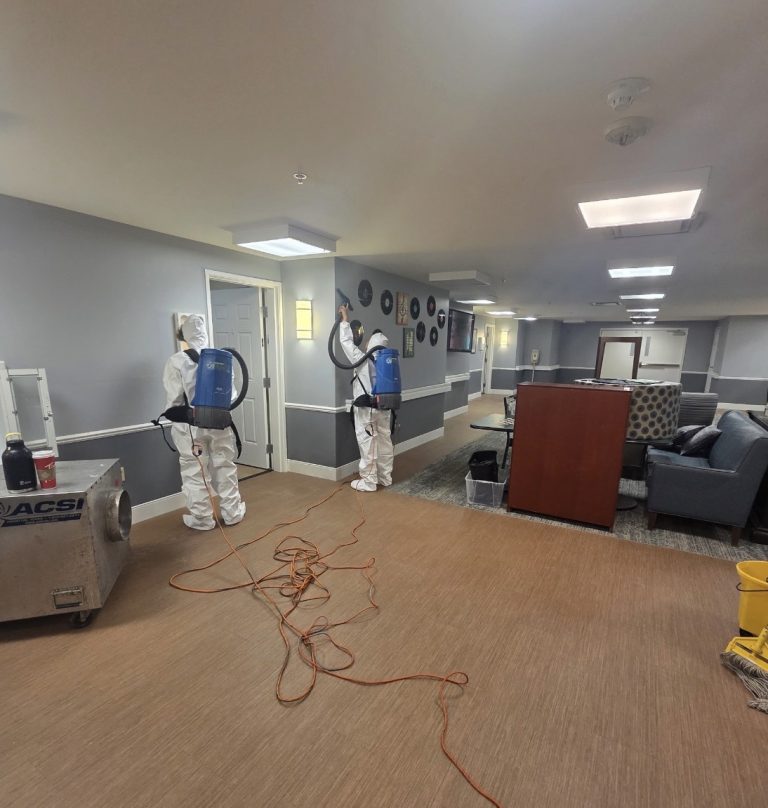
- Protect the clean areas. Containment and HEPA air scrubbers keep loose soot from spreading while we work.
- Dry soot removal first. HEPA vacuums and dry chemical sponges lift loose soot before any wet cleaning.
- Detailed wet cleaning of ceilings, walls, trim, cabinets and hard surfaces with cleaners made for oily residue.
- HVAC and duct cleaning. The furnace is repaired by your HVAC contractor, and the ductwork, registers and returns are cleaned so soot does not blow back out the first time the heat runs.
- Odor removal. Air scrubbers, plus thermal fogging or other deodorizing when the smell has soaked into the structure.
- Paint and repairs where stains cannot be cleaned out, often with an odor-sealing primer first.
Learn more about our smoke damage cleanup and soot removal in Macomb and Oakland County.

Cleaning your belongings
Soot settles on everything: clothes, bedding, curtains, lamps, dishes in open shelves, books and electronics. Many items clean up well when handled by people who know how. For bigger puffbacks, belongings are often packed out, cleaned off site and stored until the house is ready, then moved back in. Clothes and fabrics usually go through specialized laundering or dry cleaning to remove the odor, not just the stain. See our contents cleaning and restoration services.
Keep a list of anything that cannot be saved, with photos. Your insurance company will usually ask for it.
How long it takes and what drives the cost
| Puffback size | Typical cleanup time |
|---|---|
| Light soot, mostly near the furnace | A few days |
| Soot through several rooms by the ducts | About one to two weeks |
| Whole house, contents pack-out, painting | Two weeks or more |
Every puffback is different. The cost depends on how many rooms got soot, how heavy it is, what surfaces were hit (flat paint and textured ceilings are harder to clean than gloss paint), how much ductwork needs cleaning, how many belongings need cleaning or pack-out, and whether rooms need painting afterward. A free on-site inspection is the fastest way to get a real scope and estimate.
Is a furnace puffback covered by insurance?
Many Michigan homeowners policies treat a sudden puffback as covered smoke damage, which can include cleaning the house, the ducts and your belongings. Policies differ, and insurers may look closely at maintenance records, so check your policy or ask your agent. For a plain-English look at how these claims usually work, read Furnace Puffback: What It Is and Is It Covered by Insurance in Michigan? on our free education site, Restoration Advocate.
Select Restoration can document the soot damage with photos, write a detailed cleaning and repair estimate, meet your adjuster on site and do the work. For coverage disputes, talk to your agent, a licensed public adjuster or an attorney.
Soot all over the house after a puffback?
Free inspections across Macomb, Oakland and Wayne Counties. We answer 24/7. See our fire and smoke damage services in Macomb County.
24/7 Emergency: 810-523-0034Office: 586-791-3900How to prevent a puffback
- Have the furnace or boiler cleaned and tuned by a licensed HVAC technician every year, before the heating season.
- Oil heat: have the nozzle, filter and electrodes checked and replaced as recommended.
- Call for service right away if the burner rumbles, bangs or smells like fuel when it starts.
- Do not keep pressing the reset button on a furnace or boiler that will not light.
- Change furnace filters on schedule and keep working carbon monoxide alarms on every level.
Winter brings other problems too. See how cold it has to be for pipes to freeze in Michigan.
Frequently asked questions
What causes a furnace puffback?
A puffback is a small explosion inside the furnace or boiler combustion chamber, usually when fuel builds up and then ignites all at once. It is most common with oil-fired equipment that has a clogged nozzle, dirty burner or a worn part, but a gas furnace with a delayed-ignition problem can also push out soot. Annual service by a licensed HVAC technician is the best prevention.
Is puffback soot dangerous?
Soot is made of very fine particles that can irritate eyes, skin and lungs, and it is especially hard on people with asthma, small children and older adults. Ventilate the house, keep sensitive people out of heavily sooted rooms, and do not run the furnace until a technician has checked it. Make sure you have working carbon monoxide alarms.
Can I clean puffback soot myself?
A light film on one hard surface can sometimes be cleaned with a dry chemical soot sponge, but wiping with water or household cleaners usually smears oily soot and can set stains permanently. For soot on walls, ceilings, carpet, furniture and in the ductwork, professional cleaning is the safer choice.
How long does puffback cleanup take?
A small puffback limited to the basement may take a few days. A puffback that sent soot through the ductwork into every room often takes one to two weeks or more, depending on how much needs cleaning, how many belongings are packed out and whether any painting or repairs are needed.
Does homeowners insurance cover a furnace puffback?
Many Michigan homeowners policies treat a sudden puffback as covered smoke damage, but coverage depends on your policy and the cause, and claims tied to poor maintenance can be disputed. Read the furnace puffback guide on Restoration Advocate and check with your agent.
This guide is general information, not insurance or legal advice. Your policy wording controls your coverage.
