


Water in Your Crawl Space? Do This First
Do this now
- Look before you crawl. If the water is near wiring, a pump or a furnace, or it smells like sewage, stay out.
- Shut off the main water valve if a pipe could be leaking or you hear water running under the floor.
- Turn off power to a sump pump or anything else in the crawl space at the breaker, if you can do it safely.
- Take photos and video from the access hatch. Note the color and smell of the water.
- Check the floor above for soft spots, cupping or bouncing.
- Call your insurance company if a pipe burst or an appliance leaked.
- Call us at 810-523-0034. We’ll tell you on the phone what to do next.
Don’t
- Don’t crawl through standing water with power still on to the space.
- Don’t run a household shop vac on sewage water.
- Don’t cover wet soil or insulation and hope it dries.
- Don’t put fans in the crawl space without dehumidifiers. You can push damp air up into the house.
- Don’t wait for the smell to show up. By then the materials are already wet.
Why Crawl Space Water Is Worse Than It Looks
A crawl space is the one part of the house nobody checks, so water can sit there for weeks before anyone notices. Meanwhile:
- Insulation soaks up water like a sponge and stops insulating. Wet fiberglass usually has to come out.
- Floor joists and subfloor absorb moisture, which can cup hardwood, loosen tile and make floors feel soft.
- Humidity rises into the house. The air in your living space mixes with the air under it, so a wet crawl space can mean a musty smell in the bedrooms.
- Mold gets its start. Damp wood, dirt and darkness are exactly what it needs.
- In winter, pipes freeze. Crawl spaces are often the coldest spot in the house, especially under additions, sunrooms and family rooms.
What Usually Causes It
Burst or leaking supply lines, failed sump pumps, a leaking water heater or washer above, heavy rain and snowmelt running toward the foundation, clogged gutters and downspouts, sewer line problems and summer condensation.
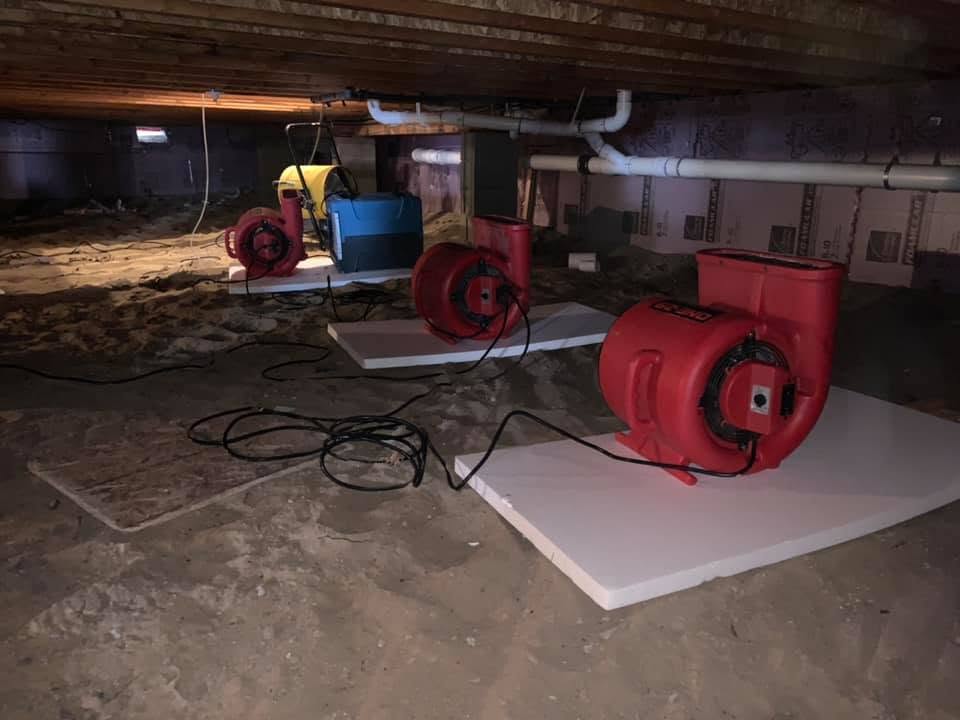
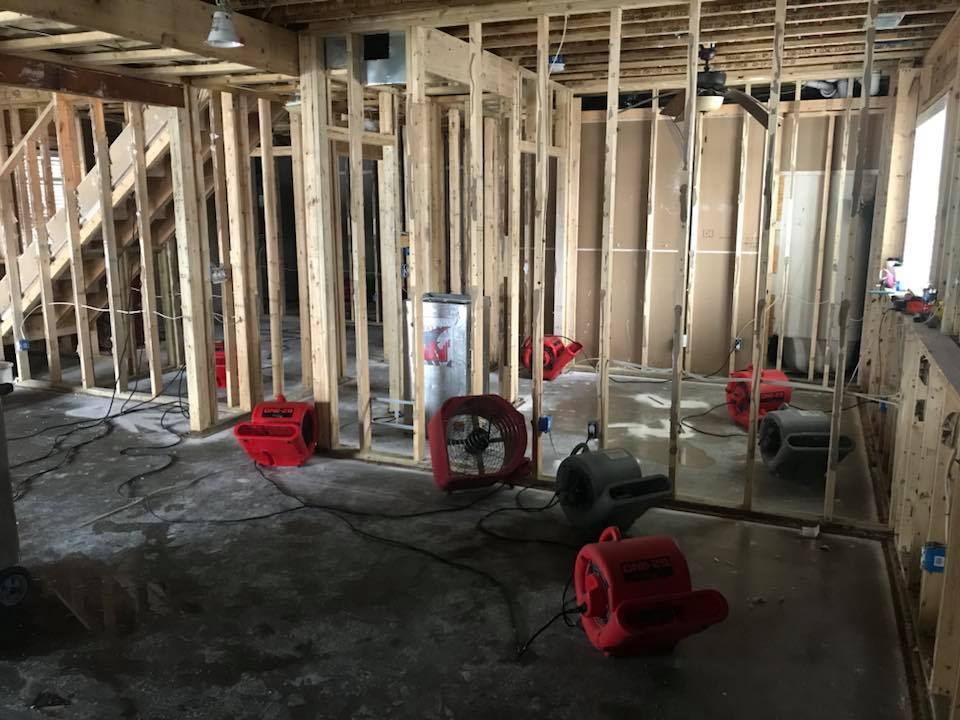
How We Dry a Wet Crawl Space
All of it is documented with photos, readings and equipment logs for your insurance file. Learn more about our structural drying process.
Crawl Space Water Cleanup Cost
Insurance jobs are written line by line in Xactimate, the same pricing software most adjusters use. If you’re paying yourself, here’s what our mitigation typically costs (water removal, drying and tear-out only; any rebuild is quoted separately):
| Type of water | Typical self-pay mitigation cost |
|---|---|
| Clean water (supply line, burst pipe) | $995 – $4,000 |
| Gray water (washer, dishwasher, sump water) | $1,995 – $6,500 |
| Sewage (sewer line, backup) | $3,995 – $14,999 |
See our full water damage cost guide or water cleanup without insurance.
Crawl Space Water and Insurance
Coverage depends on where the water came from. A sudden burst pipe is often covered. Groundwater and surface flooding usually aren’t covered by a standard homeowners policy, and sump pump or sewer backup coverage usually needs an add-on. We document the source and the damage and meet your adjuster. We don’t handle or negotiate the claim for you. Read more about burst pipe claims and sump pump coverage.

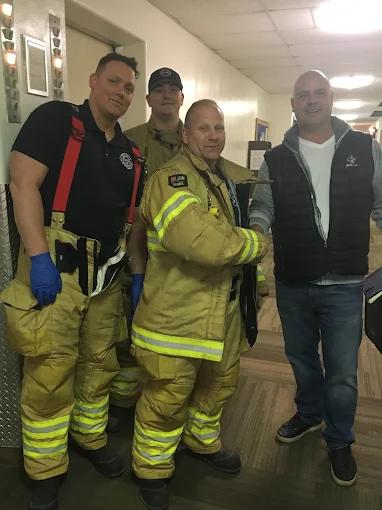
Meet the owner
Bryan Nowicki
Bryan has been in business since 1993, and in 2003 his own family’s home caught fire. He knows what the first days after a fire feel like, and he makes sure every family gets clear answers, fast help and a team that works directly with their insurance company.
If you have any questions or concerns, I’m here to help 24/7. I’d love to walk you through every one of your options so you can make the best decision for your home and your family.
— Bryan Nowicki, Owner
Local, family run, since 1993
Why Metro Detroit Homeowners Trust Select Restoration
Letting a company inside your home after a fire or flood takes trust. Here is what you can count on with us, and what our customers say about us.
What Happens When You Call
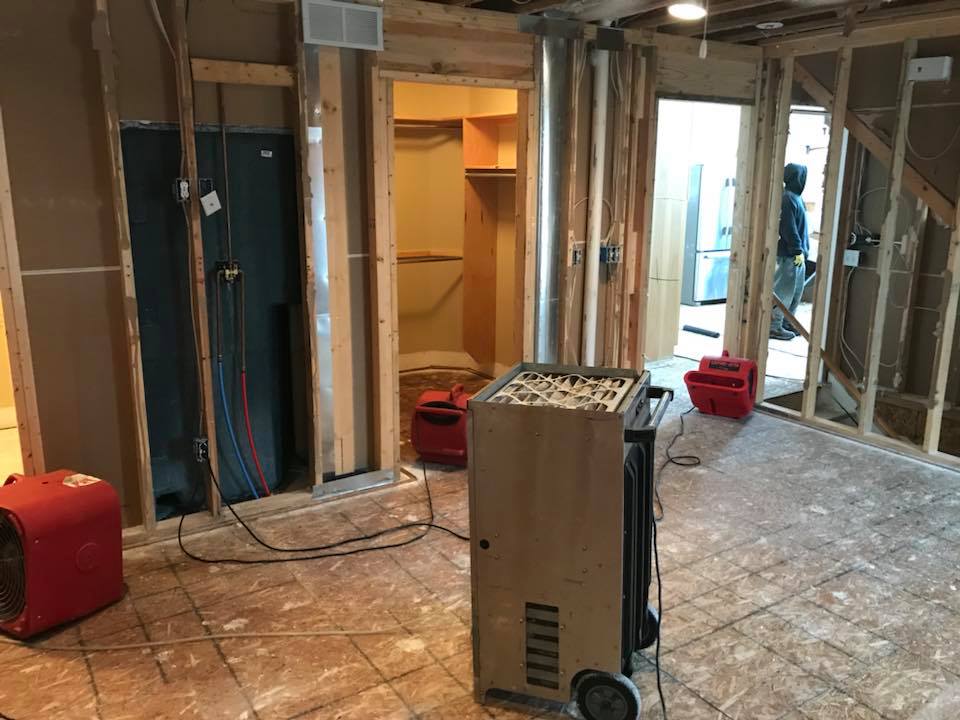
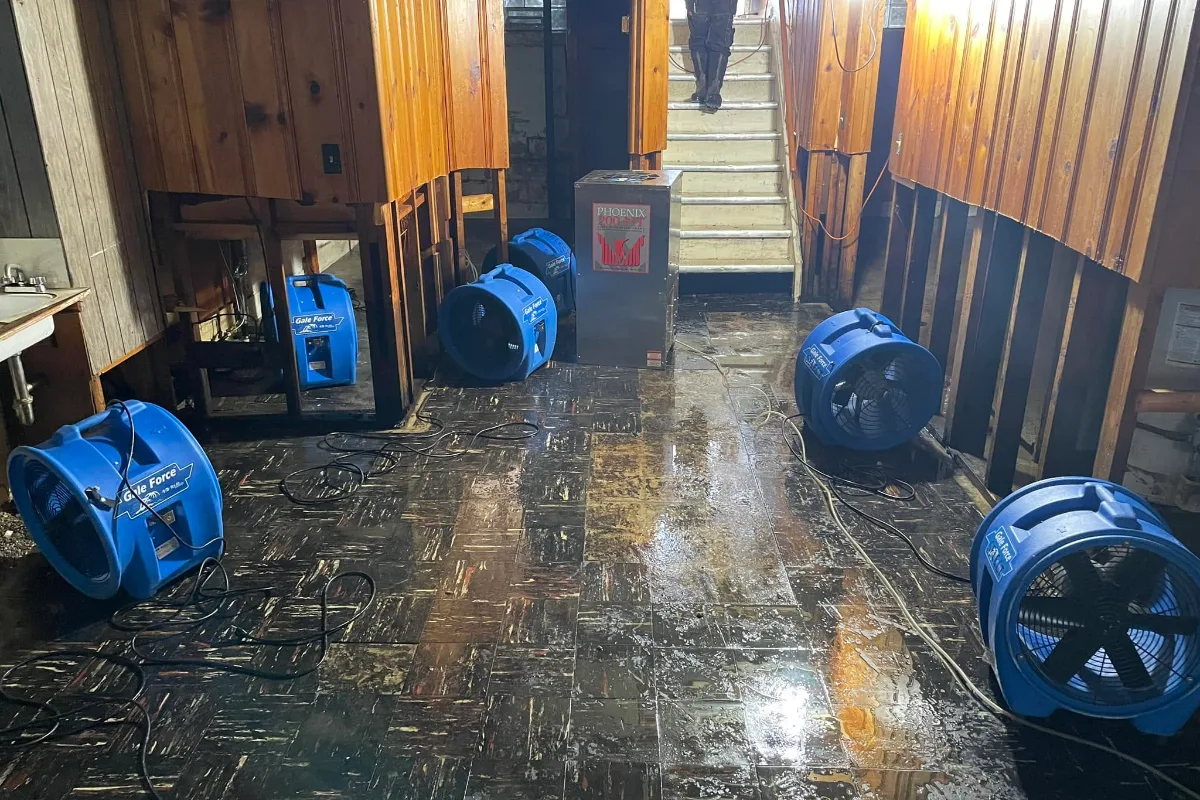
Our Water Damage Work
Our own crews, our own photos. Every job gets the same start-to-finish care.
Crawl Space Water: Questions Homeowners Ask
There’s standing water in my crawl space. What should I do?
Don’t crawl in if the water is near wiring, a pump or anything electrical, or if it smells like sewage. Shut off the main water valve if a pipe could be the cause, take photos from the access hatch, and call us at 810-523-0034. We pump it out, dry it and document it.
Is water in a crawl space after heavy rain normal?
A little dampness can happen, but standing water isn’t normal and shouldn’t be left. It soaks the insulation, raises the humidity under the whole house and can lead to musty odors and mold. If it comes back after every rain, the drainage or sump system needs attention after we dry it out.
Does homeowners insurance cover crawl space water damage?
It depends on where the water came from. Sudden, accidental water, like a burst pipe, is often covered. Groundwater and surface flooding usually are not covered by a standard homeowners policy, and sump pump or sewer backup coverage usually needs an add-on endorsement. Check your policy or ask your agent.
How long does it take to dry a crawl space?
Most crawl spaces take several days of pumping, air movers and dehumidifiers. We take moisture readings every visit and stop only when the wood and soil are back to dry levels, not when it just looks dry.
How much does crawl space water cleanup cost?
For self-pay jobs, our mitigation pricing (water removal, drying and tear-out only) typically runs $995 to $4,000 for clean water, $1,995 to $6,500 for gray water and $3,995 to $14,999 for sewage. Insurance jobs are priced line by line in Xactimate. Rebuild work is quoted separately.
Can you take care of mold in the crawl space?
We dry the crawl space and remove wet materials. If mold remediation is needed, we refer you to a trusted local mold remediation company we work with, because we don’t do mold remediation in-house.
Can a frozen pipe burst in my crawl space?
Yes, and it’s one of the most common winter calls. Crawl spaces are often the coldest part of the house, especially under additions and sunrooms. Keep the vents and access doors closed in winter and call us fast if you hear running water under the floor.