


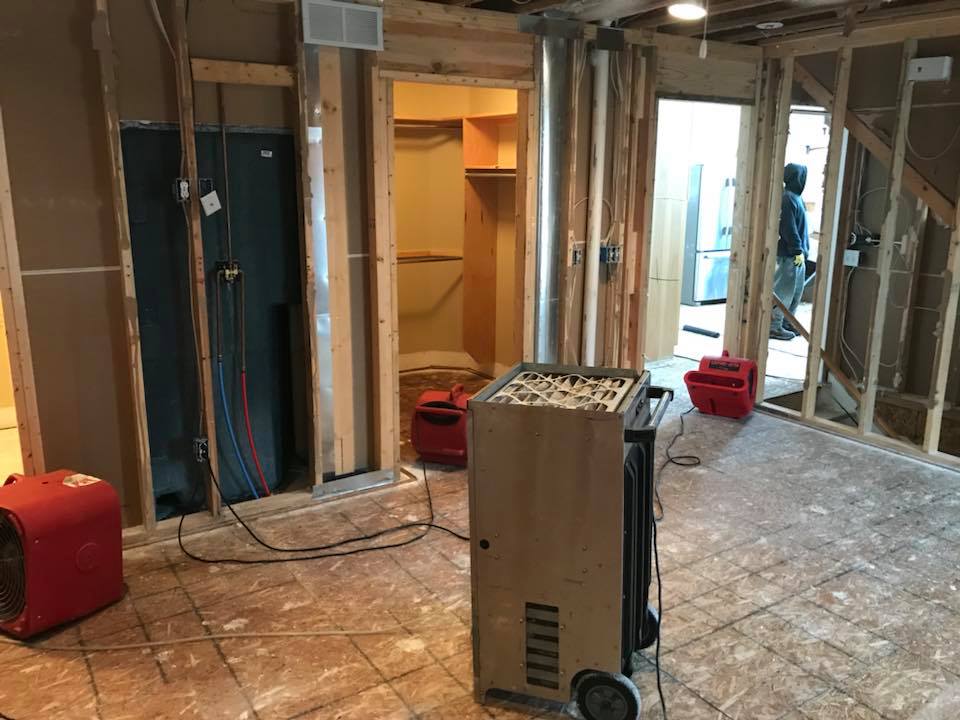
Before the Equipment Arrives: Do This First
Do this now
- Stop the water at the main shutoff or the appliance valve.
- Turn off power to wet rooms at the breaker, but only if you can reach the panel without standing in water.
- Take photos and video of the water and everything it touched.
- Get electronics, papers and small items up off wet floors if it is safe.
- Call us at 810-523-0034 and your insurance agent.
Don’t
- Don’t use a household vacuum on water. It’s an electrical hazard.
- Don’t rent a carpet cleaner and expect it to dry the pad and subfloor underneath.
- Don’t rely on box fans and a home dehumidifier for a soaked room or a flooded basement.
- Don’t run the furnace fan if the water was dirty or reached the ductwork.
- Don’t leave wet rugs, boxes or furniture sitting on wet floors.
Why Professional Equipment Beats Box Fans and Rentals
Box fans move air around the room. They don’t take water out of the house. Without real dehumidification, the water evaporating off your floors and walls just hangs in the air and soaks back into drywall, furniture and the rooms next door. That’s how a one-room leak turns into a musty house.
Professional drying is a system. Extractors remove as much water as possible first, because pulling water out as liquid is far faster than drying it out of the air. Air movers then sweep across the wet surfaces so the moisture evaporates, and dehumidifiers pull that moisture out of the air and send it down the drain.
Then we measure it. Every day we check the wet materials and the air, so the equipment runs as long as it’s needed and not a day longer. See how we map moisture and track drying.
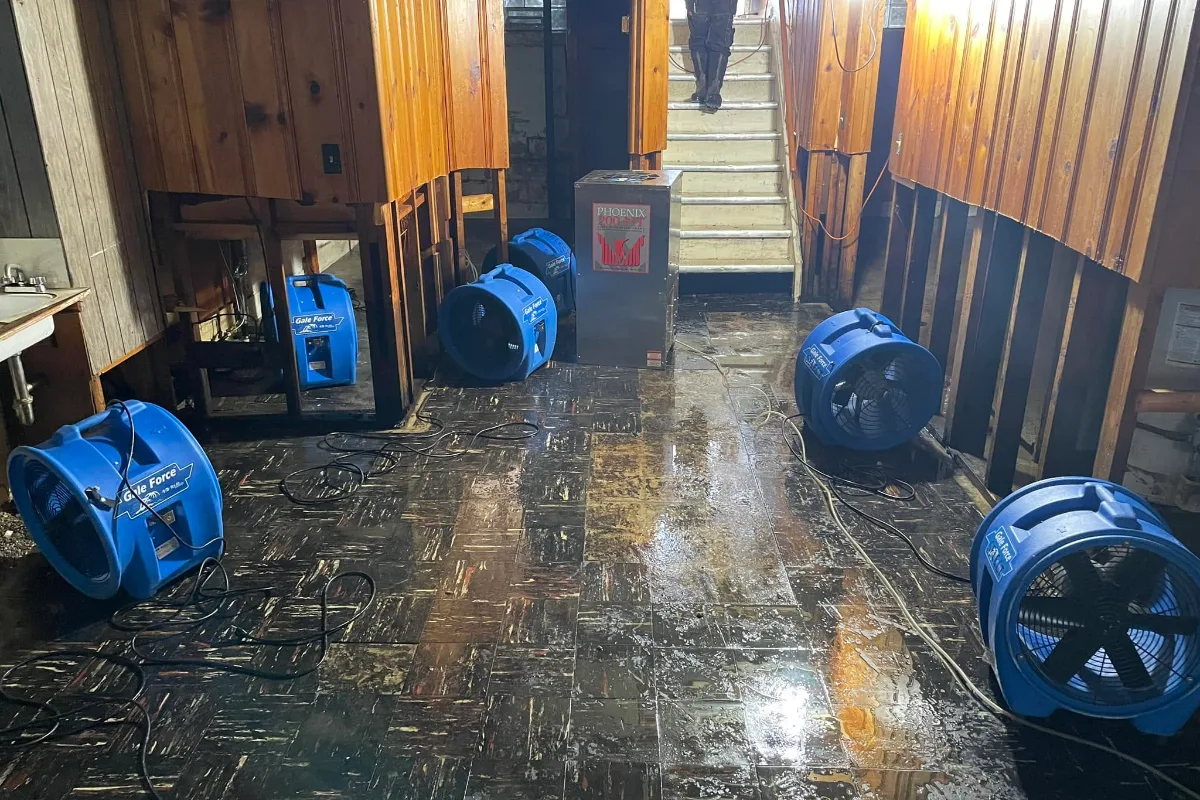
The Equipment We Bring, and What Each One Does
Powerful suction that runs off the truck, for flooded basements, soaked carpet and large areas. It pulls out far more water than a shop vac, which cuts drying time. See water extraction.
Portable extraction for upstairs rooms, condos, apartments and spots the truck hoses can’t easily reach.
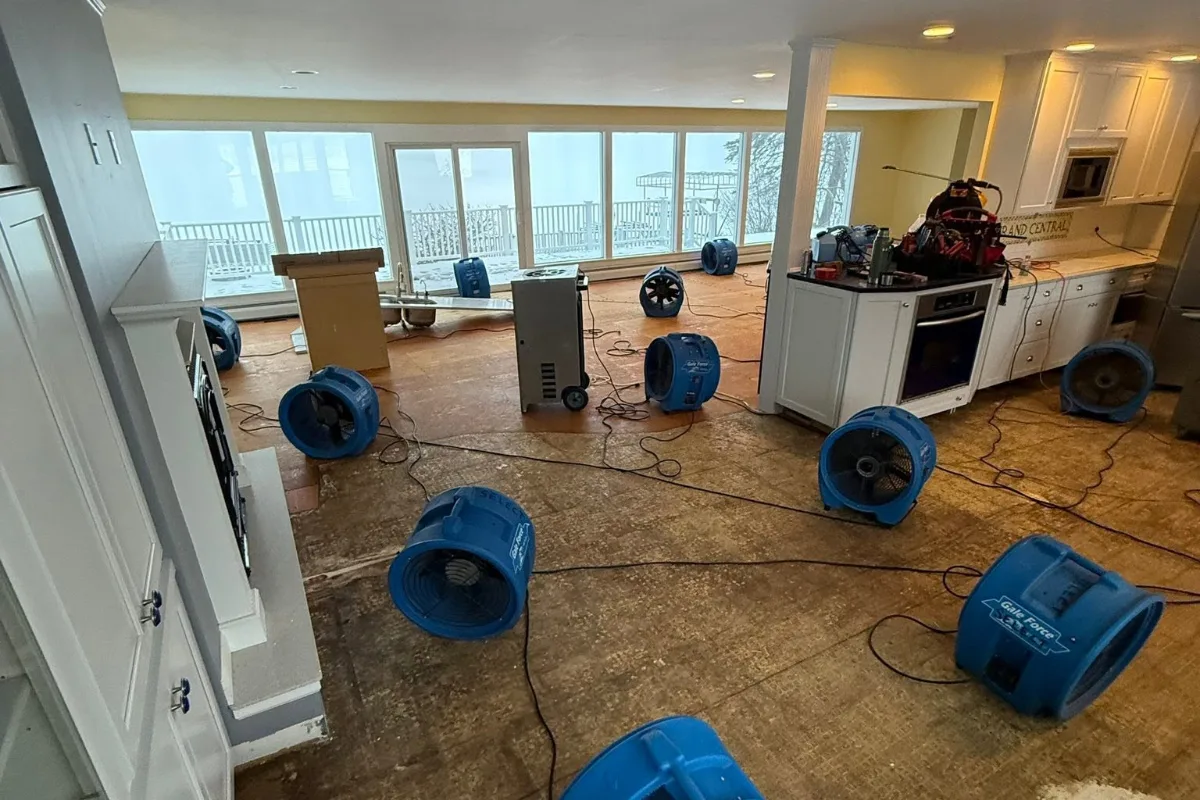
High-velocity fans built to blow across wet carpet, floors and walls so the water evaporates fast. We aim and space them based on the moisture map.
Low-grain refrigerant dehumidifiers pull large amounts of water out of the air in typical living spaces and dry the air much further than a household dehumidifier.
Instead of cold coils, they use a desiccant wheel to absorb moisture. They keep working in cold air, which makes them a good fit for cold basements, crawl spaces and dense materials like hardwood and plaster.
Mats and panels on the floor, connected to a vacuum system, pull moisture up out of hardwood and the subfloor. See hardwood floor drying.
They filter dust and airborne particles while we work, especially during tear-out or after dirty water. Mold remediation, when it is needed, goes through our trusted partner.
FLIR cameras find hidden water, Protimeter Surveymaster meters confirm it and hygrometers track the air. See thermal imaging.
LGR vs. Desiccant Dehumidifiers: Which One We Use
Both are professional dehumidifiers. They pull water out of the air in different ways, and each one has places where it works best.
| Phoenix LGR | Phoenix desiccant | |
|---|---|---|
| How it works | Cools the air over coils so the water condenses out | A desiccant wheel absorbs moisture out of the air |
| Best for | Most living spaces, carpet and drywall at normal room temperatures | Cold basements and crawl spaces, hardwood, plaster and other dense materials |
| In cold air | Slows down as the air gets colder | Keeps working in cold air |
| How we set it up | Placed in the room, draining to a sink, floor drain or pump | Often ducted into the space, and sometimes paired with LGR units |
What to Expect While the Equipment Runs
- Noise. Air movers and dehumidifiers are loud, and they run around the clock, because drying stops when they stop.
- Power. We plan the setup around your circuits so breakers don’t trip. If the power is out, ask about temporary heat and power.
- Warm rooms. Drying rooms can get warm. That is normal, and it helps.
- Kids and pets. Keep them away from the cords and the equipment.
- How long. Many homes are dry in about three to five days. Hardwood, plaster and cold basements can take longer. The readings decide.
Does Insurance Pay for the Equipment?
When the water damage is covered, drying equipment is normally part of the mitigation charges on the claim, documented with our daily readings. Your own policy decides, so check with your agent. We write the estimate in Xactimate, the same pricing software most adjusters use, and meet the adjuster at the property. More on whether insurance covers water damage and the insurance restoration process. Questions about your insurer can go to Michigan DIFS at 877-999-6442.
How We Set Up a Dry-Out
Why Fast Extraction Matters
Every gallon we pull out as liquid is a gallon the dehumidifiers don’t have to pull out of the air. That is why extraction comes first, and why the truck-mounted extractor matters.
Speed matters too. The longer water sits, the more it wicks into drywall, swells wood and soaks the subfloor, and the more likely mold becomes. Call 810-523-0034 as soon as you find it.
More on structural drying and flooded basement cleanup.

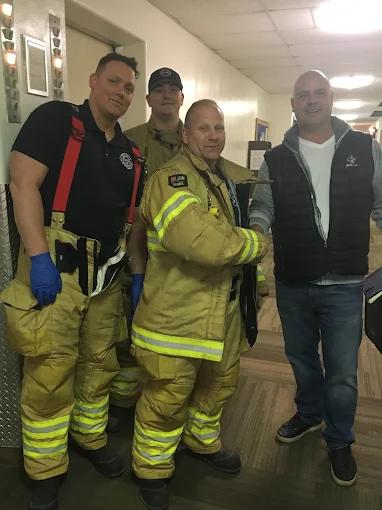
Meet the owner
Bryan Nowicki
Bryan has been in business since 1993, and in 2003 his own family’s home caught fire. He knows what the first days after a fire feel like, and he makes sure every family gets clear answers, fast help and a team that works directly with their insurance company.
If you have any questions or concerns, I’m here to help 24/7. I’d love to walk you through every one of your options so you can make the best decision for your home and your family.
— Bryan Nowicki, Owner
Local, family run, since 1993
Why Metro Detroit Homeowners Trust Select Restoration
Letting a company inside your home after a fire or flood takes trust. Here is what you can count on with us, and what our customers say about us.
What Happens When You Call
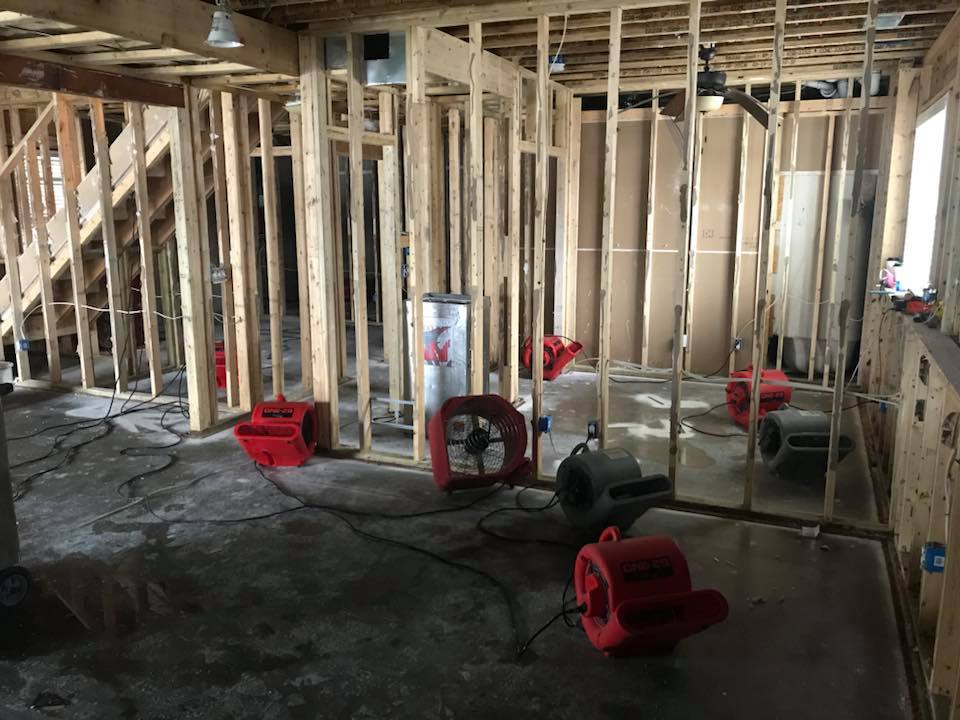
Our Equipment at Work
Our own crews and our own equipment on real Michigan jobs.

Drying Equipment Questions
What equipment do you use to dry water damage?
A truck-mounted extractor and portable Flood Hog extractors, Phoenix air movers, Phoenix LGR and desiccant dehumidifiers, Phoenix HEPA air scrubbers, an Injectidry system for hardwood floors, and FLIR thermal cameras, Protimeter Surveymaster meters and hygrometers to measure the drying.
What is the difference between LGR and desiccant dehumidifiers?
An LGR dehumidifier cools the air over coils so water condenses out, and it works best at normal room temperatures. A desiccant dehumidifier absorbs moisture with a desiccant wheel and keeps working in cold air, which helps in cold basements and with dense materials like hardwood.
Can I just use fans and my own dehumidifier?
For a small spill caught right away, maybe. For soaked carpet, wet drywall or a flooded basement, household fans and dehumidifiers cannot pull the water out fast enough, and moisture stays in the walls and subfloor. That is where mold and warped floors come from.
How long will the equipment be in my house?
Until the readings say it is dry. Many homes take about three to five days. Hardwood, plaster, subfloors and cold basements can take longer.
How loud is the drying equipment?
Loud enough that you will notice it, and it runs around the clock. Turning it off slows the drying. If you need a quieter room to sleep in, tell us and we will plan around it.
Will the equipment run up my electric bill?
It does use electricity. Some policies reimburse the extra cost, so keep your bills and ask your agent.
What is Injectidry?
A floor drying system that uses mats and panels connected to a vacuum to pull moisture up out of hardwood floors and the subfloor. It can save floors that would otherwise have to be torn out.