


After an Explosion: Do This Next
Do this now
- Get out and stay out. Account for everyone, including pets, from a safe distance.
- Call 911 and your gas utility from outside, even if the fire looks out.
- Wait for the all-clear. Don’t go back in until the fire department or the building official says it’s safe.
- Take photos and video from a safe spot outside. The adjuster will want to see the house before anything is moved.
- Call your insurance agent and get a claim number started.
- Call us at 810-523-0034. We brace, board up and fence the property so it’s protected from weather, theft and people wandering in.
Don’t
- Don’t touch the gas meter, the valves or the electrical panel. Leave that to the utility and the fire department.
- Don’t go back inside for belongings, even quickly. A racked wall or cracked beam can shift hours or days later.
- Don’t let anyone start tearing the house down before your adjuster has seen it.
- Don’t sign with a crew that shows up uninvited and wants a deposit to “hold your spot.”
- Don’t leave the property open overnight. An empty, damaged house draws trespassers.
What an Explosion Does to a House
A gas or furnace explosion is different from a regular house fire. The blast is a pressure wave. It pushes out in every direction for a split second, then the air rushes back in. That can:
- Push walls out of plumb and lift or shift the roof.
- Crack basement walls and foundations.
- Blow out windows, doors and their frames, and knock drywall and ceilings loose throughout the house.
- Break gas, water and drain lines, so there’s often water damage on top of everything else.
- Start a fire, which brings smoke damage and water from the fire hoses.
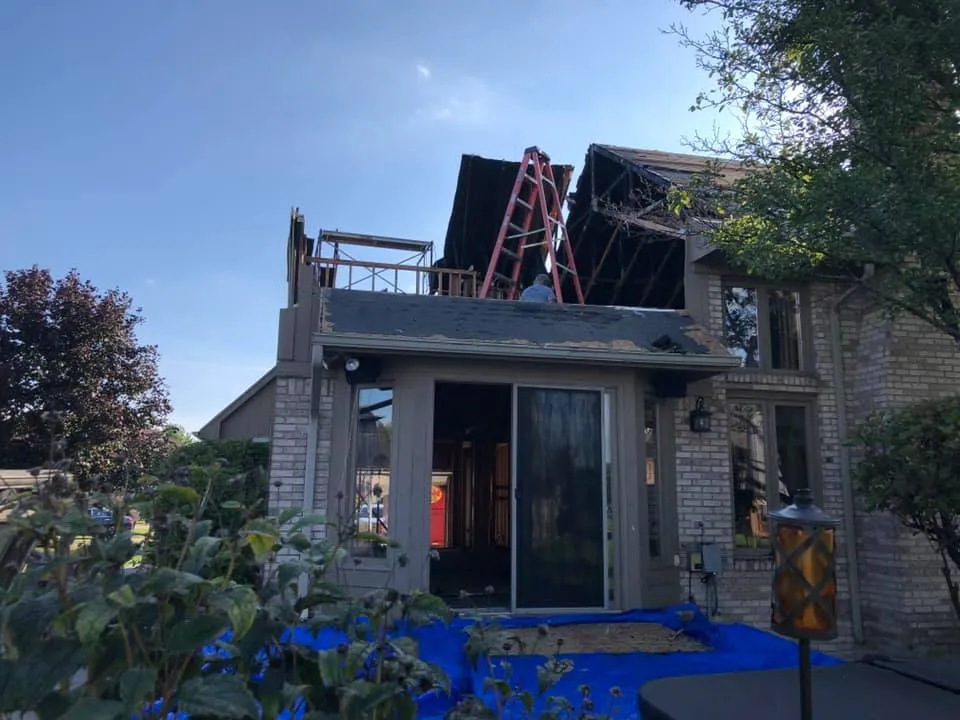
A lot of the damage isn’t visible from the street. A house can look mostly intact and still have framing that’s no longer carrying the load it should. That’s why bracing and a structural engineer’s review come before the rebuild.
Who Does What After an Explosion
An explosion brings a lot of people to your door in the first few days. Here’s how the roles usually break down.
| Who | What they usually handle |
|---|---|
| Fire department | Rescue, putting out any fire, and controlling the scene until it’s safe |
| Gas utility (DTE Energy or Consumers Energy) | Shutting off and checking the gas service and meter |
| Building department | May limit or restrict entry until the structure is checked, and issues permits for the rebuild |
| Structural engineer | Evaluates the framing and foundation and writes the repair plan the city will want to see |
| Your insurance company | Your claim, the adjuster’s inspection and the coverage decisions |
| Select Restoration | Shoring, board-up and fencing, debris removal, soot and water cleanup, contents, and the rebuild |
What We Handle After an Explosion
We brace damaged walls, floors and roof framing before anyone works under them. More on emergency shoring.
Every opening gets covered, the locks get changed, and temporary fencing goes up when the site needs it. See emergency board-up.
Glass, drywall, insulation and broken framing get cleared out safely. When parts of the house can’t be saved, see fire damage demolition.
If the blast started a fire, we handle the soot, smoke odor and charred materials. See fire damage restoration.
Broken pipes and fire hoses leave water in the walls and floors. We extract it and dry the structure with commercial equipment.
What can be saved gets inventoried, packed out, cleaned and stored, and the rest is documented for the claim. See contents cleaning.
We coordinate with your structural engineer and the building department. More on permits, inspections and engineers.
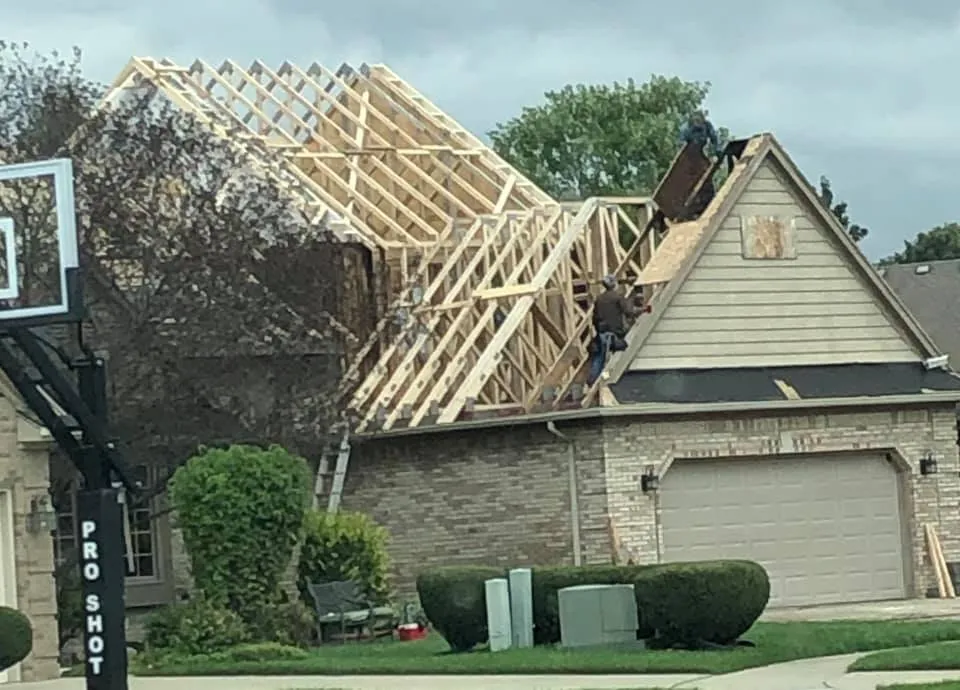
As a Michigan licensed builder (#2102185156), we rebuild framing, roofs, walls, windows and interiors to the engineer’s plan, with a 3-year workmanship warranty.
Does Insurance Cover a Gas or Furnace Explosion?
Usually, yes. Explosion is a covered cause of loss on most standard homeowners and commercial property policies, and a fire that follows is covered as fire. The details that matter are limits, code upgrades and what happens next door. Your own policy decides, so check each item with your agent.
| Type of damage | Usually |
|---|---|
| Damage to your house from a gas or furnace explosion | Covered, minus your deductible |
| Fire and smoke damage after the explosion | Covered as fire |
| Debris removal and demolition of damaged parts | Often included, subject to policy limits |
| Code upgrades the city requires during the rebuild | Only if your policy has ordinance or law coverage, and only up to its limit |
| Damage to neighboring homes | Usually handled first through each owner’s own insurance |
| Hotel and meals while you can’t live at home | Often covered under additional living expense |
How We Help With the Claim
We document the damage with photos, moisture readings and notes, write a line-by-line estimate in Xactimate (the same pricing software most adjusters use), meet the adjuster at the property and do the repairs. Your claim itself stays between you and your insurance company. If your deductible is a concern, ask about our $500 Upgrade Credit. More on the insurance restoration process. Questions about your insurer can go to Michigan DIFS at 877-999-6442.
What Happens When You Call
Why One Company Helps on an Explosion Job
An explosion job pulls in more trades than almost any other loss: shoring, board-up, fencing, demolition, fire and water cleanup, contents, engineering, framing, roofing, windows, drywall and finishes. When each of those is a different company, you end up being the general contractor in the worst week of your life.
We’ve been doing restoration from our shop at 31435 Utica Rd in Fraser since 1993 and have served more than 8,100 customers. One team runs the job from the first board to the final walk-through. See how we handle a post-disaster rebuild or another sudden structural loss like a car into a house.

Meet the owner
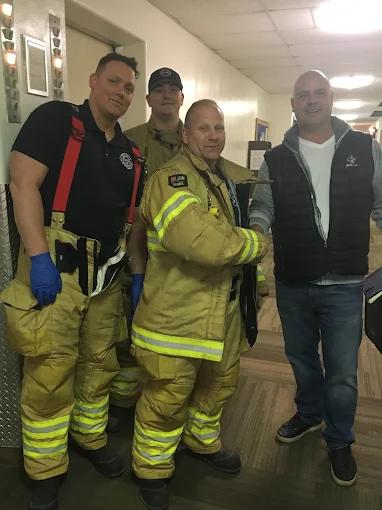
Bryan Nowicki
Bryan has been in business since 1993, and in 2003 his own family’s home caught fire. He knows what the first days after a fire feel like, and he makes sure every family gets clear answers, fast help and a team that works directly with their insurance company.
If you have any questions or concerns, I’m here to help 24/7. I’d love to walk you through every one of your options so you can make the best decision for your home and your family.
— Bryan Nowicki, Owner
Local, family run, since 1993
Why Metro Detroit Homeowners Trust Select Restoration
Letting a company inside your home after a fire or flood takes trust. Here is what you can count on with us, and what our customers say about us.
What Happens When You Call
Our Crews at Work
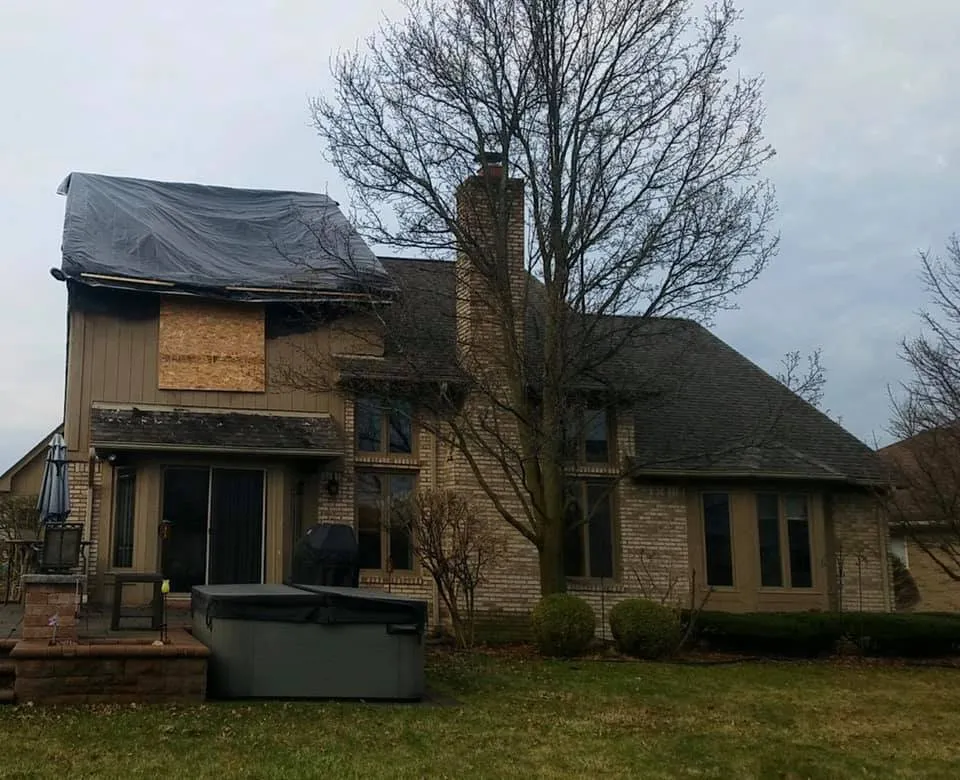
Our own crews, our own photos. Every structural loss gets the same start-to-finish attention.

Explosion Damage Questions
Does homeowners insurance cover a gas explosion?
Usually, yes. Explosion is a covered cause of loss on most standard homeowners policies, and a fire that follows is covered as fire. Limits, code upgrade coverage and your deductible still apply. Your own policy decides, so check it with your agent.
What should I do right after a gas explosion?
Get everyone out and away from the building. Don’t use light switches, phones or vehicles near the house. Call 911 and your gas company, DTE Energy or Consumers Energy, from outside. Don’t go back in until the fire department or building official says it’s safe.
Can my house be saved after an explosion?
Often, yes, but it depends on what the structural engineer finds in the framing and foundation. Some houses can be braced and rebuilt; others need partial or full demolition. We brace and secure the house right away so you have time to make that decision with good information.
Who pays for damage to my neighbor’s house?
In most cases each owner goes through their own insurance company first, and the insurers sort out responsibility afterward. Talk to your agent before you agree to pay for anything yourself.
How fast can you secure the property?
We answer 24/7 and are usually at your door within about an hour once the fire department releases the scene. Bracing, board-up and fencing start right away when crews are available.
Do you work with structural engineers and the city?
Yes. Explosion repairs usually need an engineer’s report and permits. We coordinate with your engineer and the building department and build to the approved plan.