


Sump Pump Failure Cleanup Basement Water Out, Dried and Repaired
Newer Wayne County homes in Livonia, Canton and Northville depend on sump pumps, and many older homes are adding them. When one fails, we extract the water, dry the basement properly and fix the damage, with your insurance paperwork handled alongside.
Family-owned since 1993•IICRC Certified Firm•24/7 dispatchSump Pump Quit? Start Here
Sump Pumps Across Wayne County
Wayne County has two very different kinds of basements. Newer homes in western Wayne County, like Livonia, Canton, Plymouth and Northville, were built with drain tile and a sump pump, and those pumps carry the load every time it rains. Older homes in Detroit, Dearborn and the Downriver cities often have no sump pump at all; their footing drains run into the sewer, and some owners are now adding sump pumps and backwater valves to protect against backups.
Either way, a pump is only as good as its power and its switch. Summer storms that knock out power for hours, a float that hangs up on the side of the pit, or a pump that simply wears out can put inches of water on the floor overnight.
What We Do After a Sump Failure

Sump Pump Claims in Wayne County
Sump failures are usually covered only through a water backup or sump overflow endorsement with its own limit. We document the cause and every damaged material and write the estimate in Xactimate, the software your adjuster uses.
- Cause documented.Power, switch or pump failure.
- Moisture logs.Daily readings.
- Contents listed.Before disposal.
Measured, not guessed
Thermal Imaging, Moisture Maps and Daily Drying Logs
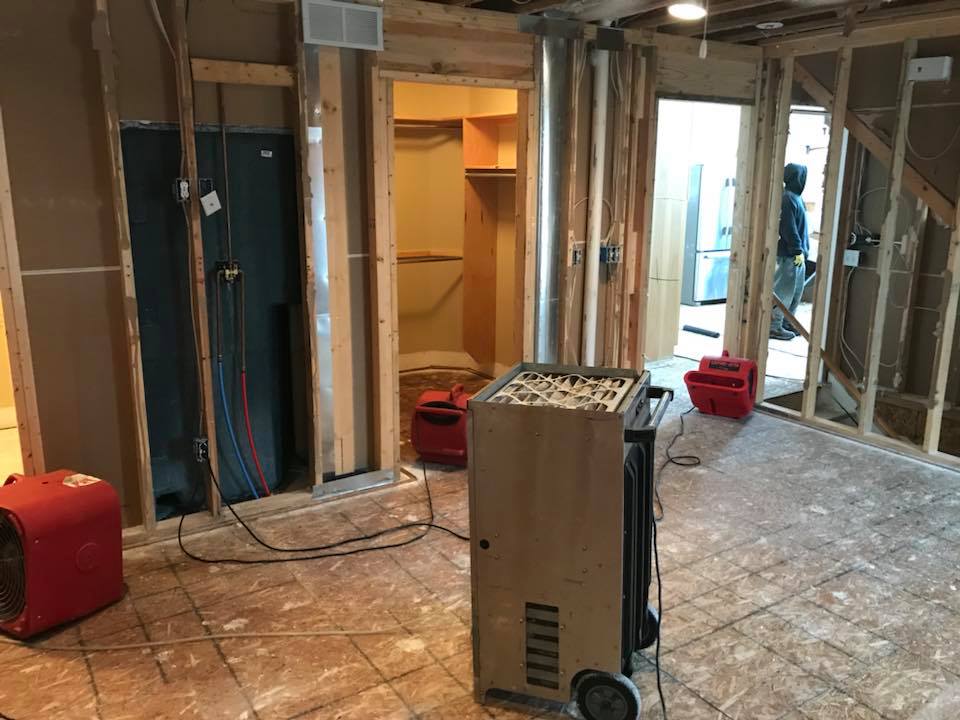
When a sump pump quits, water wicks into drywall, carpet pad and the bottom plates of your basement walls where nobody can see it. That’s why every sump pump cleanup we run in Wayne County relies on three measuring tools from start to finish.
Sump Pump Failure Questions
The power went out in a storm and the pump stopped. Is that covered?
A pump that quit in an outage is usually handled under the water backup or sump overflow endorsement, not the base policy, and that endorsement has its own dollar limit. Some policies also exclude damage from a power failure that started away from your home. Read the exclusions page, or bring the policy to the free inspection and we will go through it with you.
How fast does the water need to come out?
Start within the first day if you can. Drywall and carpet pad wick water upward, so the longer it sits, the more has to be cut out. In a finished basement the wet area under carpet and behind baseboards is usually wider than the spot you can see, so we map it with moisture meters before deciding what stays.
My older Detroit house doesn't have a sump pump. Should it?
Many older homes drain the footing tile straight into the sewer instead of a sump pit, which is part of why they back up in big storms. Whether a sump pump or backwater valve makes sense depends on the house; a licensed plumber can tell you. Detroit's Basement Backup Protection Program helps some neighborhoods with this work.
Why is the price a range and not one number?
Square footage, how high the water climbed the walls, and whether the basement is finished set the price. A bare slab sits near the low end of the $1,995–$6,500 gray water range; a finished family room with carpet, pad and drywall to remove sits near the top. You get a written number after the free inspection, before work starts.
Related Help
Self-pay prices are typical ranges for mitigation only (water removal, drying and tear-out); your final price comes from a free on-site inspection. Insurance information is general, not legal or insurance advice.