


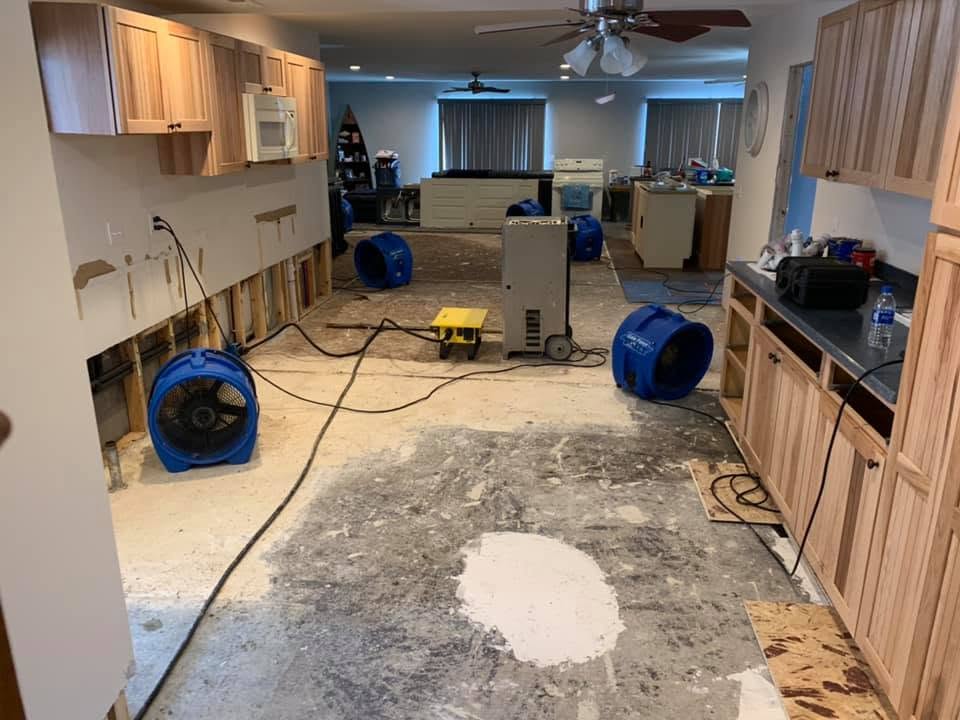
After a Leak or Flood: Do This First
Do this now
- Stop the water at the main shutoff or the appliance valve.
- Turn off power to wet rooms at the breaker, but only if you can reach the panel without standing in water.
- Take photos and video before anything gets moved or thrown out.
- Lift rugs, furniture and boxes off wet floors if it is safe to do.
- Call your insurance agent and call us at 810-523-0034.
Don’t
- Don’t assume it’s dry because the surface feels dry. Drywall, wood and subfloors hold water inside.
- Don’t close up walls or put flooring back down until the readings say it’s dry.
- Don’t crank the heat and shut the house up. Warm, wet air spreads moisture into other rooms.
- Don’t let anyone pull drying equipment on a schedule instead of on readings.
- Don’t throw out damaged belongings before they’re photographed for the claim.
What Moisture Mapping Is
A moisture map is a drawing of the wet area. We go room by room with a Protimeter Surveymaster, which works two ways: a non-invasive mode that reads through drywall, wood and flooring without leaving a mark, and a pin mode that gives an exact moisture reading inside wood and other materials. Every reading goes on the map with its location, so we know exactly where the water went and where it stopped.
We start with a dry standard. Before we can call something wet, we need to know what dry looks like in your house. We take readings on the same materials in rooms the water never reached. That becomes the goal, and drying is finished when the wet areas match it.
Mapping often starts with a FLIR thermal imaging scan to find cool, wet patterns, and the meter confirms each one.
What We Measure and Why
| Reading | Tool | Why it matters |
|---|---|---|
| Moisture in drywall, plaster and trim | Protimeter Surveymaster, non-invasive mode | Shows how far water wicked up the walls and spread across ceilings, without poking holes |
| Moisture content in framing, subfloor and hardwood | Protimeter Surveymaster, pin mode | Tells us when wood is truly dry inside, not just dry on the surface |
| Relative humidity (RH) | Thermo-hygrometer | How much water the air is holding. High humidity slows drying and can feed mold. |
| Temperature | Thermo-hygrometer | Warm air dries faster. We watch it so the dehumidifiers work at their best. |
| Grains per pound (GPP) | Calculated from hygrometer readings | The actual amount of water in the air. Comparing the room, the outdoors and the dehumidifier exhaust tells us the equipment is pulling water out. |
| Hidden wet areas | FLIR thermal imaging camera | Finds cool, wet patterns that we then confirm with the meter |
Daily Drying Monitoring: What We Check Every Visit
Once the drying equipment is set, we come back every day and check:
We re-read the same points on the map, so you can watch the numbers come down day by day.
Hygrometer readings in the wet rooms, the dry rooms and outside, so we know the house is actually getting drier.
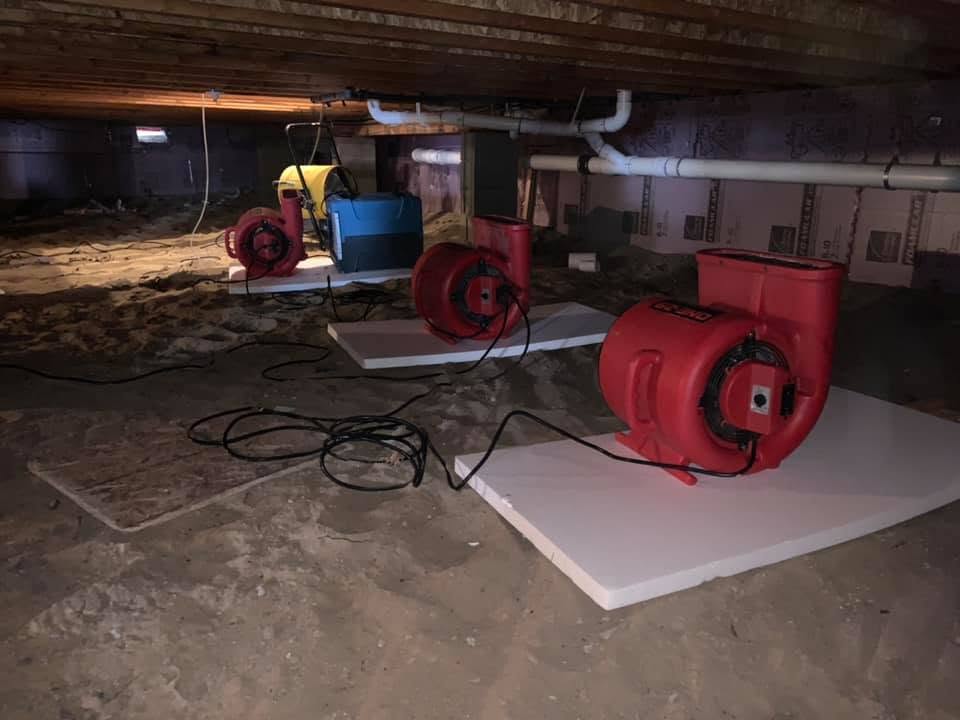
We confirm each Phoenix dehumidifier is pulling water out and move or add air movers where drying is slow. See the equipment we bring.
Areas that aren’t drying get a closer look. Sometimes that means drilling small holes behind the baseboard so air can reach inside the wall. See water damage inside walls.
Musty smells or signs of contamination get handled right away, and Phoenix HEPA air scrubbers clean the air when needed.
Every reading goes into a written drying log with dates and locations, for you and your adjuster.
Drying Logs and Your Insurance Claim
Adjusters want to know why equipment was on site, how long it ran and when the house was dry. A moisture map and a daily log answer all three. The IICRC S500 standard for professional water damage restoration calls for this kind of monitoring and documentation, and we follow it.
Sudden water damage like a burst pipe is covered under many homeowners policies; long-term leaks and seepage often are not. Your own policy decides, so check with your agent.
How We Help With the Claim
We document the damage with photos, thermal images, moisture maps and daily readings, write a line-by-line estimate in Xactimate (the same pricing software most adjusters use), meet the adjuster at the property and do the repairs. Your claim itself stays between you and your insurance company. More on whether insurance covers water damage and the insurance restoration process. Questions about your insurer can go to Michigan DIFS at 877-999-6442.
How a Moisture-Mapped Dry-Out Works
When Does the Equipment Come Out?
When the readings say so, not on a set day. Many homes are dry in about three to five days, but dense materials like hardwood, plaster, subfloors and concrete can take longer, and cold Michigan basements can be slower too.
Pulling equipment early is how mold and warped floors show up after a job that looked finished. We would rather show you a reading than guess. If another company already dried your home and something still seems off, ask for a free second opinion.

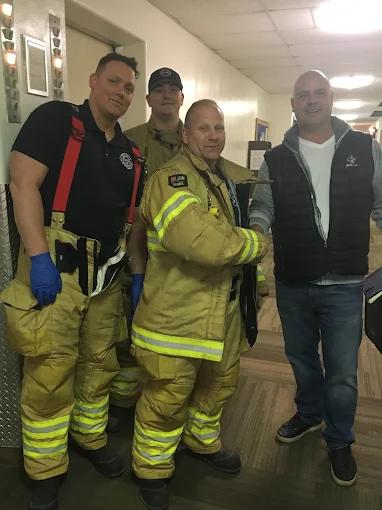
Meet the owner
Bryan Nowicki
Bryan has been in business since 1993, and in 2003 his own family’s home caught fire. He knows what the first days after a fire feel like, and he makes sure every family gets clear answers, fast help and a team that works directly with their insurance company.
If you have any questions or concerns, I’m here to help 24/7. I’d love to walk you through every one of your options so you can make the best decision for your home and your family.
— Bryan Nowicki, Owner
Local, family run, since 1993
Why Metro Detroit Homeowners Trust Select Restoration
Letting a company inside your home after a fire or flood takes trust. Here is what you can count on with us, and what our customers say about us.
What Happens When You Call
Our Crews at Work
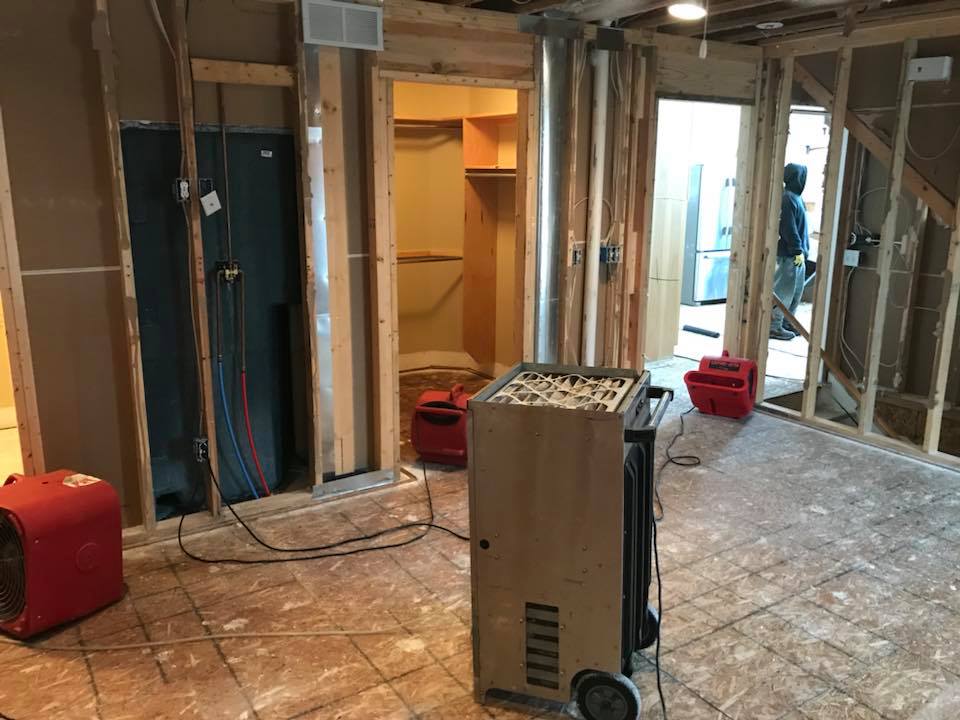
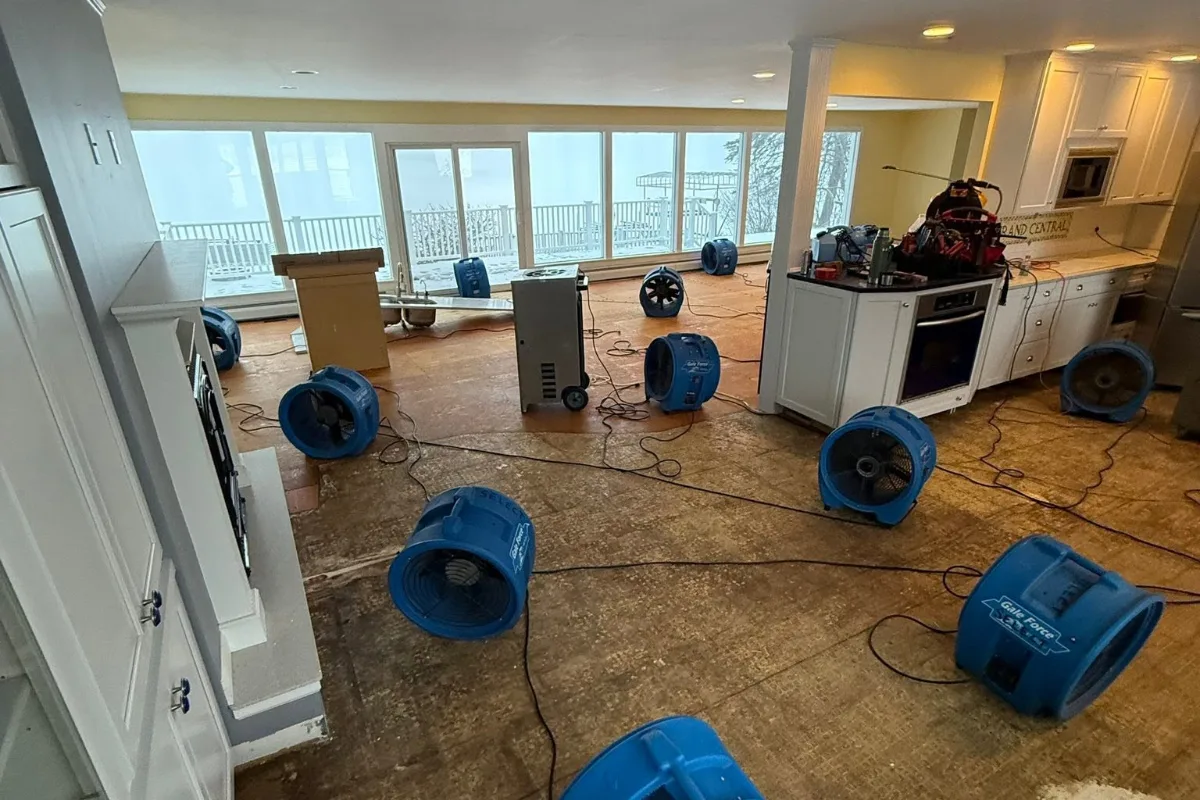
Our own crews, our own equipment. Every dry-out is mapped and logged until it is done.

Moisture Mapping Questions
What is moisture mapping?
It is a room-by-room record of where materials are wet and how wet they are. We take readings with a Protimeter Surveymaster, mark each one on a map and re-check the same spots every day until they are dry.
How do you know when my house is dry?
We compare readings in the wet areas to a dry standard, which is the same materials in rooms the water never reached. When they match and the air readings are back to normal, the house is dry.
What is a Protimeter?
A Protimeter Surveymaster is a professional moisture meter. It has a non-invasive mode that reads through surfaces without damage and a pin mode for exact readings inside wood and other materials.
What does a hygrometer measure?
Temperature and relative humidity. From those we calculate grains per pound, the actual amount of water in the air, which tells us whether the dehumidifiers are pulling water out of the house.
Why do you come back every day?
Drying changes fast. Daily readings show what is drying and what is not, so we can move equipment where it is needed and take it out as soon as it is done. It also builds the drying log your adjuster will ask for.
Can I turn the equipment off at night?
Please do not unless we tell you to. Turning it off lets the humidity climb back up and can add days to the job. If noise or power is a problem, call us and we will adjust the setup.
Will I get a copy of the readings?
Yes. You get the moisture map and the drying log, and we can share them with your adjuster.